Chatbots were many businesses’ first introduction to AI, but they’re far from where the real value lies today. The most impactful AI business use cases in 2026 are working quietly behind the scenes inside finance teams, supply chains, and operations driving measurable cost savings, accuracy improvements, and faster decision-making. According to recent enterprise AI research, the majority of organizations are now reporting measurable ROI from at least one AI initiative, a clear sign that AI has moved well past the experimentation phase.
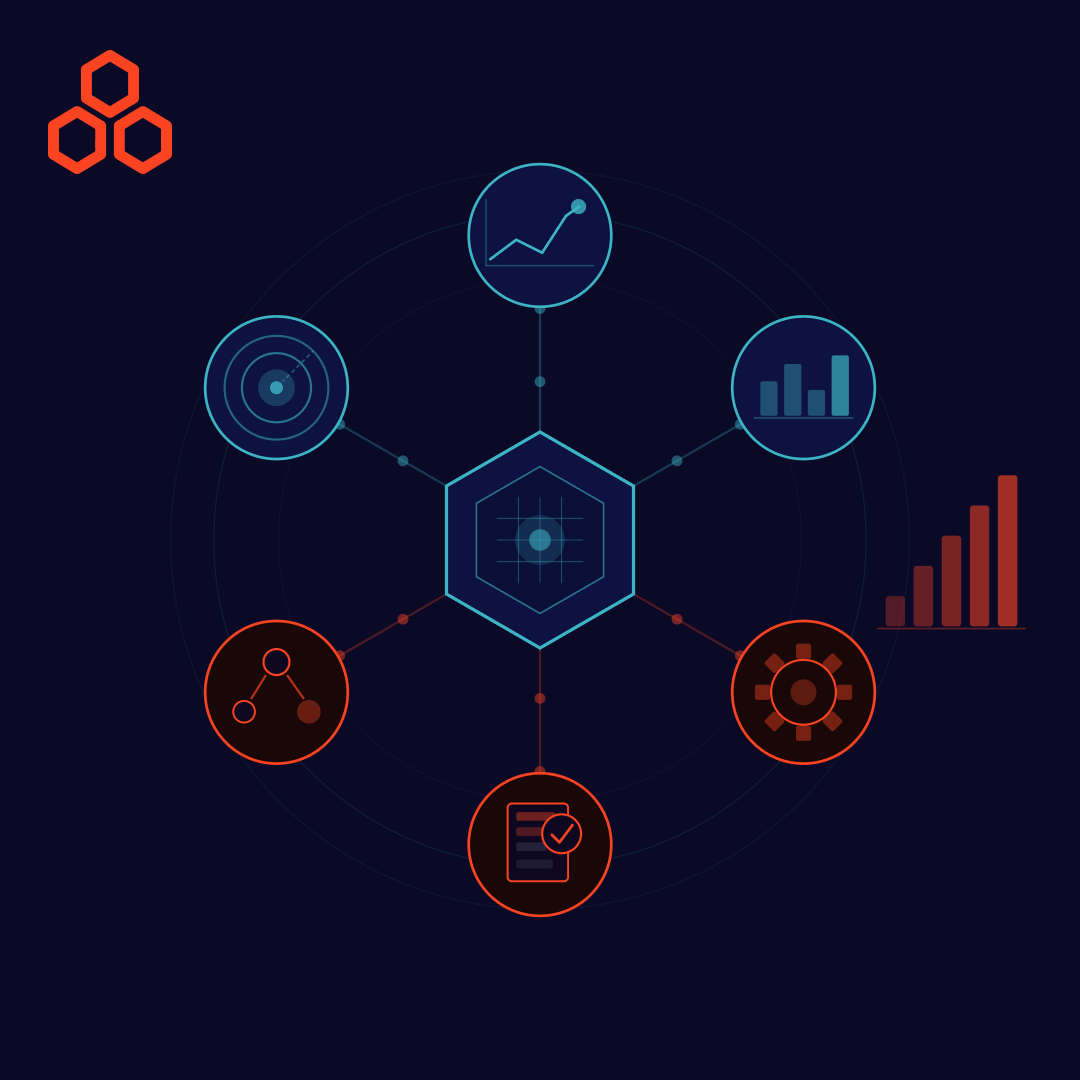
Chatbots and virtual assistants are useful, but they represent only a small slice of what AI can do for a business. The AI business use cases delivering the strongest returns tend to be narrow and process-specific applied to one high-volume, high-cost business problem rather than deployed as a general-purpose tool across the entire company. That focus is what separates AI investments that pay off from ones that quietly stall out after the pilot phase.
1. Fraud Detection and Risk Management AI models analyze transaction patterns in real time, flagging anomalies far faster and more accurately than manual review processes, particularly in finance and insurance.
2. Demand Forecasting and Inventory Planning Retail and supply chain teams use AI to predict demand fluctuations, reducing overstock, stockouts, and unnecessary carrying costs.
3. Financial Reporting and Analysis AI tools automate data aggregation and flag inconsistencies, cutting the time finance teams spend on manual reporting each month.
4. Predictive Maintenance Manufacturing and logistics businesses use AI to predict equipment failures before they happen, reducing costly unplanned downtime.
5. Contract and Document Review Legal and procurement teams use AI to scan contracts for risk clauses and compliance issues, dramatically cutting review time.
6. Personalized Customer Experiences AI-driven recommendation engines and dynamic content personalize the customer journey, improving conversion rates and retention.
7. Talent Acquisition and Workforce Planning AI helps HR teams screen candidates, identify skill gaps, and forecast staffing needs more accurately.
Some industries see faster, clearer returns than others. Finance benefits heavily from fraud detection and forecasting. Healthcare gains from administrative automation and diagnostic support tools. Retail sees strong results from demand forecasting and personalization. Manufacturing benefits significantly from predictive maintenance. That said, nearly every industry has at least one high-volume, repetitive process well-suited to AI the key is identifying the right one first, rather than adopting AI broadly without a clear target.
Costs vary significantly depending on scope. A narrow, well-defined use case like automating invoice processing or contract review can often be implemented with a modest budget and existing tools. Broader initiatives, like custom predictive models or enterprise-wide automation, require larger investment in data infrastructure, integration, and ongoing model maintenance. Businesses generally see the best returns by starting with a focused pilot tied to a specific business process, then scaling once results are proven a pattern similar to how we recommend approaching legacy system modernization and other major technology investments.
The businesses seeing the strongest returns define success metrics before implementation, not after. Common measurements include:
Pairing these metrics with a clear technology roadmap helps ensure AI investments stay tied to real business outcomes rather than becoming disconnected experiments.
The businesses getting the most value from AI aren’t necessarily using the most advanced technology they’re the ones being deliberate about where they apply it. Start with a single high-cost, high-volume process, define what success looks like upfront, and expand from there. This approach, paired with sound software architecture best practices, ensures AI initiatives integrate cleanly into existing systems rather than becoming isolated tools that are difficult to scale or maintain.
Suggested Reads
Trending Resources