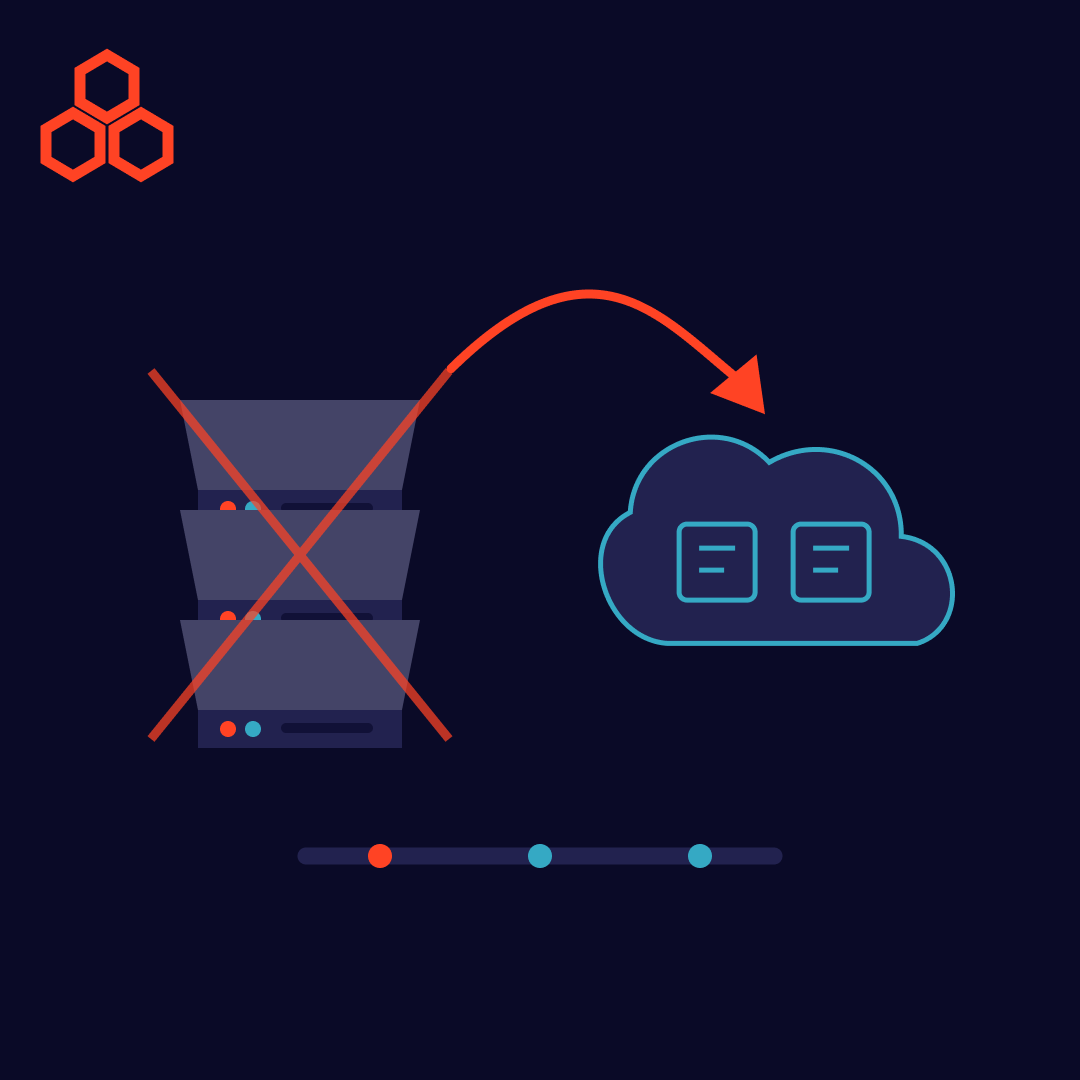
Almost every large organization has run an AI pilot by now. Far fewer can point to an AI system that runs in production, is owned by someone, and measurably moves a business number. That gap, often called “pilot purgatory,” is the central challenge of enterprise AI implementation today. The good news: the reasons pilots stall are well understood, and most of them have little to do with the AI model itself.
Enterprise team mapping the path from AI pilot to production deployment
Published figures vary, and most reach us through secondary reporting, so treat them as directional. SumatoSoft’s pilot-to-production guide compiles several: McKinsey’s 2025 State of AI report found nearly two-thirds of organizations still in pilot mode, with 39% reporting any EBIT impact, and S&P Global found the share of companies abandoning most of their AI initiatives rose from 17% to 42% in a single year. MIT’s widely quoted finding that roughly 95% of generative AI pilots show no measurable P&L impact is also cited, although the scope of that figure is described inconsistently across sources. The consistent message is that starting AI is easy and scaling it is hard.
SumatoSoft groups the causes into six gaps:
Notice that only one of the six is about the model. The rest are data, engineering, governance, and organizational problems, which is why a technically successful demo can still fail to ship.
Ladder diagram showing the five stages of enterprise AI implementation from sandbox to scaled operation
The same guide proposes a simple way to locate where an initiative is stuck:
To use it, find the highest rung your system fully satisfies, then fix whatever blocks the next one. It prevents the common mistake of investing in scale before the basics are proven.
BCG’s 10-20-70 principle, as cited in SumatoSoft’s guide, holds that about 70% of the effort in successful deployments goes to people and process, 20% to data and technology, and 10% to algorithms. If that ratio feels backwards for your project, it’s worth asking where your team is actually spending its time. The same lessons apply to any new platform, as we cover in enterprise software user adoption: tools only create value when people use them. Align the rollout with your technology roadmap so AI investments support business priorities.
Successful enterprise AI implementation looks less like a technology launch and more like operational change management. The organizations that scale are the ones that tie every pilot to a business metric, invest in data and integration early, and give each system an owner. Start by locating your current rung, fix the next blocker, and repeat.
Suggested Reads
Trending Resources