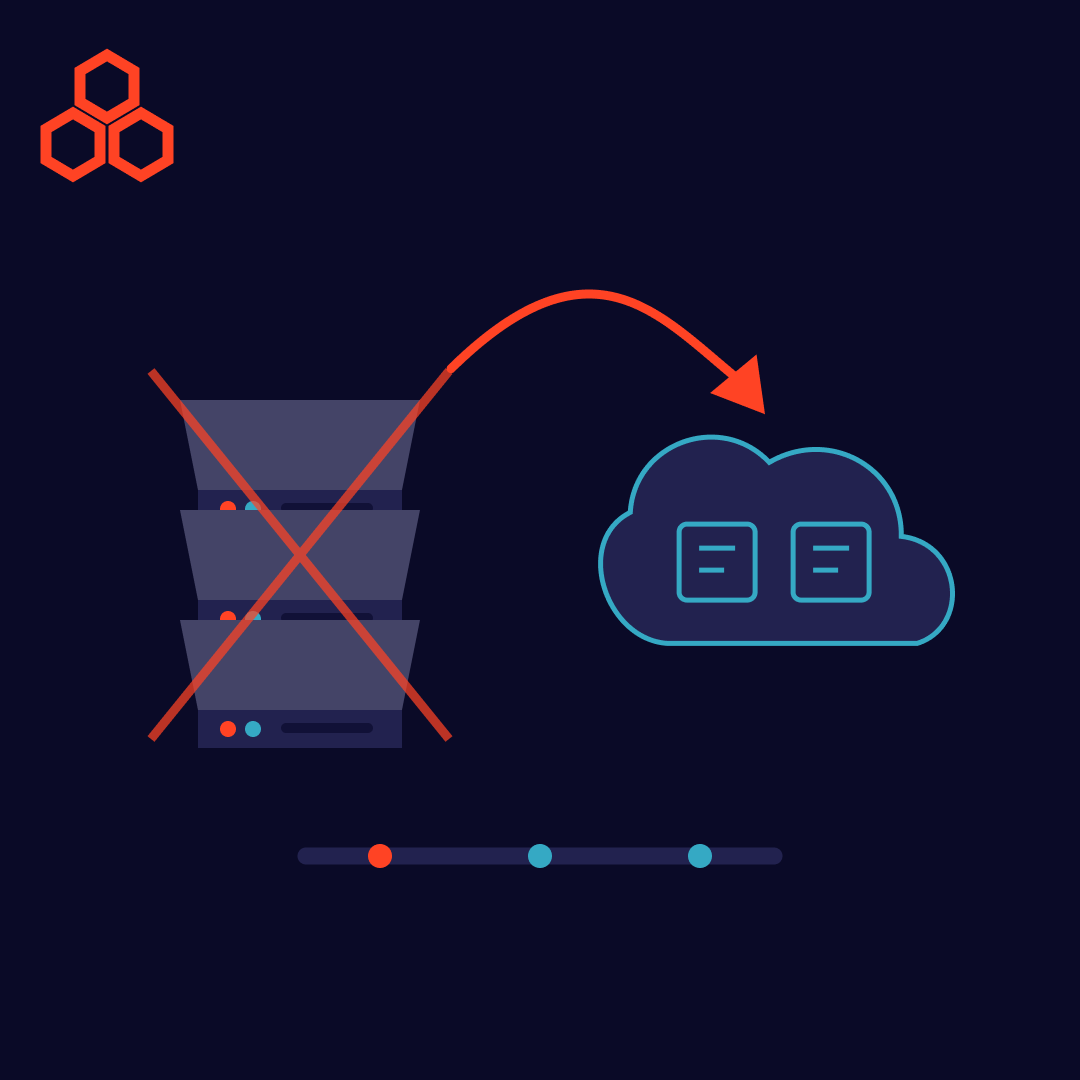
Most modernization projects don’t stall because the target technology is hard. They stall because nobody fully understands the system being replaced. Decades-old applications often have thin documentation, tangled dependencies, and a shrinking pool of people who remember why things work the way they do. AI legacy modernization attacks exactly this problem: agentic AI can read large codebases, map how they behave, and help teams move to modern platforms in smaller, safer steps than a traditional rewrite allows.
Engineers reviewing an AI-generated map of a legacy application during modernization
Standard AI assistants answer one prompt at a time. Agentic AI works toward a goal across many steps: it explores files, runs analysis, drafts changes, checks its own output, and iterates. That multi-step behavior suits modernization, where the work is rarely one big task. It’s thousands of connected ones: understanding, planning, translating, and testing.
Anthropic’s overview of AI-assisted COBOL modernization breaks the work into four stages. As a vendor publication its claims are directional rather than benchmarked, but the stages match how most teams describe the work.
1. Discovery and Mapping AI reads the whole codebase, traces execution paths, and maps data flows, including hidden coupling through shared files or databases that simple call graphs miss. For systems nobody has documented, this alone can save weeks.
2. Risk Analysis Tightly coupled modules are riskier to move, while isolated components make good early candidates. AI can flag both, along with duplicated logic and existing technical debt.
3. Planning and Test Drafting AI can suggest a migration order based on dependencies and draft tests that check whether migrated code produces the same outputs as the original.
4. Incremental Implementation Teams translate logic to a modern language, wrap legacy components in APIs, and run old and new code side by side, validating each component before moving on.
Diagram of the four stages of AI legacy modernization from discovery to incremental implementation
Vendor figures vary widely. One provider, SoftServe, reports at least 50% shorter translation time and over 85% of translated code running without further changes, but it doesn’t publish how those numbers were measured. Treat claims like these as a reason to pilot, not a forecast. The honest takeaway is that a roughly 85% hit rate still means about one line in seven needs human attention, and in business-critical systems that remainder is exactly where the risk lives.
Human judgment stays essential. Engineers decide which components go first, define the target architecture, and manually validate key business scenarios.
AI legacy modernization won’t remove the need for careful engineering, but it changes the economics. Understanding an undocumented system, the slowest and most expensive step, becomes much faster, which makes incremental modernization realistic for projects once judged too costly. Start small, validate relentlessly, and let AI handle the heavy reading while your engineers own the decisions.
Suggested Reads
Trending Resources