How AI Is Modernizing Ontario’s Mining Sector

AI in Ontario Mining

Introduction 

Ontario’s mining industry is entering a period where artificial intelligence, advanced analytics, automation, and connected technologies can play a significant role in improving how minerals are discovered, extracted, processed, and managed. 

As Ontario continues to strengthen its critical minerals and energy ecosystem, mining companies are looking for practical ways to translate technology into measurable operational outcomes better exploration decisions, higher productivity, improved recovery, safer worksites, lower energy consumption, and more effective environmental monitoring. 

Idea Theorem works at the intersection of AI, data, cloud engineering, and digital transformation, helping organizations identify where AI can create the greatest operational value and turn those opportunities into production-ready solutions. 
The opportunity is particularly compelling across four areas of the mining value chain.

AI in Ontario Mining


AI Use Cases Across the Mining Value Chain
 

We organize the opportunity into four areas, spanning twelve high-leverage use cases each backed by a service we deliver. 

  1. Exploration & Discovery

Mineral exploration involves working with enormous volumes of geological, geophysical, satellite, and historical drilling data. AI can help mining companies analyze these datasets faster and identify patterns that may be difficult to detect through conventional interpretation alone. 

  • Mineral Target Prediction 

Machine learning models can combine geophysical surveys, satellite imagery, geological information, and historical drill data to identify areas with higher mineral prospectivity. This can help exploration teams prioritize targets and make drilling programs more data driven. 

  • Subsurface Modelling 

AI can combine gravity, magnetic, seismic, electromagnetic, and geological datasets to create more detailed 3D representations of subsurface structures. These models can help geologists understand potential mineralization and improve drill planning. 

  • Resource Estimation 

Machine learning can support the estimation of deposit size, grade, continuity, and uncertainty from available drilling data. Better modelling can help exploration teams prioritize resources and reduce unnecessary exploration expenditure. 


  1. Operations & Automation

Once a mine is operational, AI can help optimize the movement of people, materials, equipment, and energy across complex mining environments. 

  • Autonomous Fleet Management 

AI can coordinate haul trucks, loaders, drills, and other mobile equipment by analyzing routes, loads, traffic, operating conditions, and equipment availability. This can improve fleet utilization while reducing unnecessary travel, fuel consumption, and idle time. 

  • Predictive Maintenance 

Mining equipment generates continuous streams of vibration, temperature, pressure, acoustic, and performance data. Machine learning can analyze these signals to identify early indicators of equipment degradation. 

Instead of waiting for equipment to fail, maintenance teams can receive earlier warnings and schedule interventions around operational requirements. 

  • Energy & Emissions Optimization 

AI can optimize energy consumption across crushers, mills, pumps, ventilation systems, and other energy-intensive processes. By responding to changes in production conditions and ore characteristics, AI can help reduce energy consumption per ton while supporting emissions-reduction objectives. 


  1. Processing & Recovery

Mineral processing is another area where relatively small improvements can have a significant financial impact. AI can help processing facilities respond to changing ore characteristics and optimize processes in real time. 

  • AI-Driven Ore Sorting 

Computer vision and spectral imaging can classify material according to characteristics such as grade and composition. AI systems can help identify waste material earlier in the process, reducing the amount of unnecessary material entering downstream processing. 

  • Flotation & Recovery Control 

AI models can continuously evaluate variables such as reagent dosage, pH, airflow, froth characteristics, and feed composition. The resulting recommendations can help operators maintain more stable recovery as ore conditions change. 

  • Throughput Optimization 

Rather than optimizing individual processing stages in isolation, AI can model the relationship between crushing, grinding, flotation, dewatering, and other stages of the processing line. 

This creates an opportunity to recommend operating parameters that balance throughput, recovery, energy consumption, and equipment constraints. 


  1. Safety, ESG & Workforce

AI’s role in mining extends beyond productivity. It can also support safer worksites, continuous environmental monitoring, regulatory visibility, and knowledge sharing across the workforce. 

  • Hazard & PPE Detection 

Computer vision systems can monitor cameras across mining environments to identify situations such as missing PPE, restricted-zone violations, unsafe proximity between vehicles and workers, and other potential hazards. 

The objective is not simply to record incidents, but to identify risk conditions early enough for corrective action. 

  • Tailings & ESG Monitoring 

Mining companies can combine satellite imagery, drones, IoT sensors, environmental data, and AI analytics to continuously monitor areas such as tailings facilities, water quality, emissions, and surrounding ecosystems. 

This can provide earlier visibility into potential risks and support more consistent, evidence-based ESG reporting. 

  • GenAI Operator Copilots 

Generative AI can make technical knowledge easier for workers to access. Operators and maintenance teams can interact with an AI assistant using natural language to find information from equipment manuals, SOPs, maintenance procedures, and incident documentation. 

Instead of searching through multiple documents, workers can ask questions and receive relevant information when they need it.
 

What Idea Theorem Brings to Mining AI 

Implementing AI in mining requires more than selecting an AI model. Successful deployment depends on data quality, infrastructure, integration with existing operational systems, governance, cybersecurity, and most importantly understanding the actual problems faced by people working on-site. 

Idea Theorem brings an end-to-end AI and engineering capability to help organizations move from identifying an opportunity to deploy a production-ready solution. 

  • AI Readiness Assessment 

Evaluate data maturity, technical capabilities, organizational readiness, and AI opportunity gaps. 

  • Theorem Foresight 

Identify and prioritize the highest-value AI opportunities based on operational requirements and business impact. 

  • Theorem Atlas AI 

Develop an AI vision and roadmap covering priorities, dependencies, governance, implementation of sequencing, and investment planning. 

  • Custom AI Solutions 

Design and deploy AI models for specific mining challenges across exploration, operations, predictive analytics, optimization, and decision support. 

  • Predictive Analytics 

Turn geological, equipment, sensor, and processing data into actionable operational insights. 

  • AI-Driven Workflows 

Integrate AI recommendations, alerts, and automation directly into everyday operational workflows. 

  • Theorem Engage AI 

Deploy conversational AI assistants that give operators, maintenance teams, and employees easier access to institutional and technical knowledge. 

  • Cloud & Engineering 

Build production-grade AI infrastructure across Azure, AWS, and Google Cloud, supported by data platforms, MLOps, APIs, and enterprise integrations. 

Why This Conversation Matters 

As Ontario builds out its critical minerals and energy strategy, the gap between government intent and operational reality gets closed by the companies willing to do the technical work – safely, at scale, and in partnership with the people running these operations every day. 

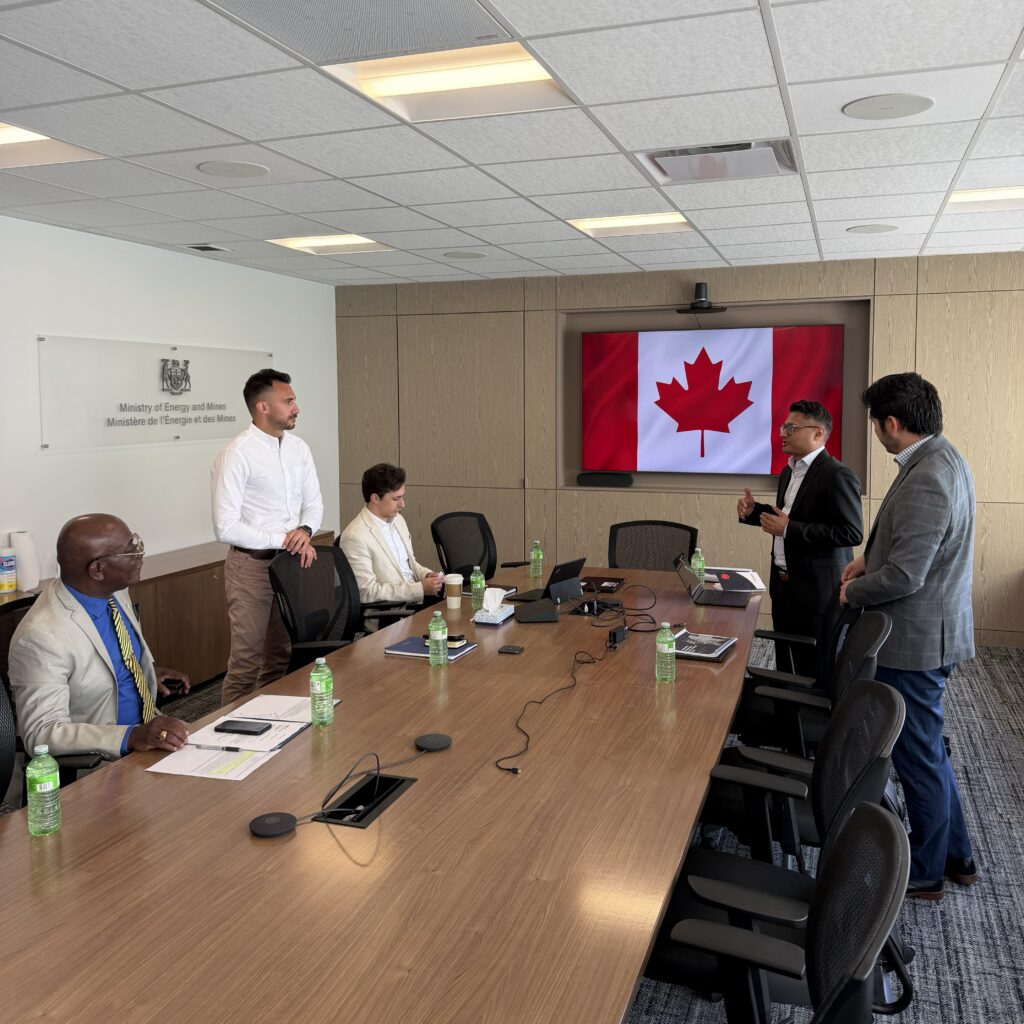
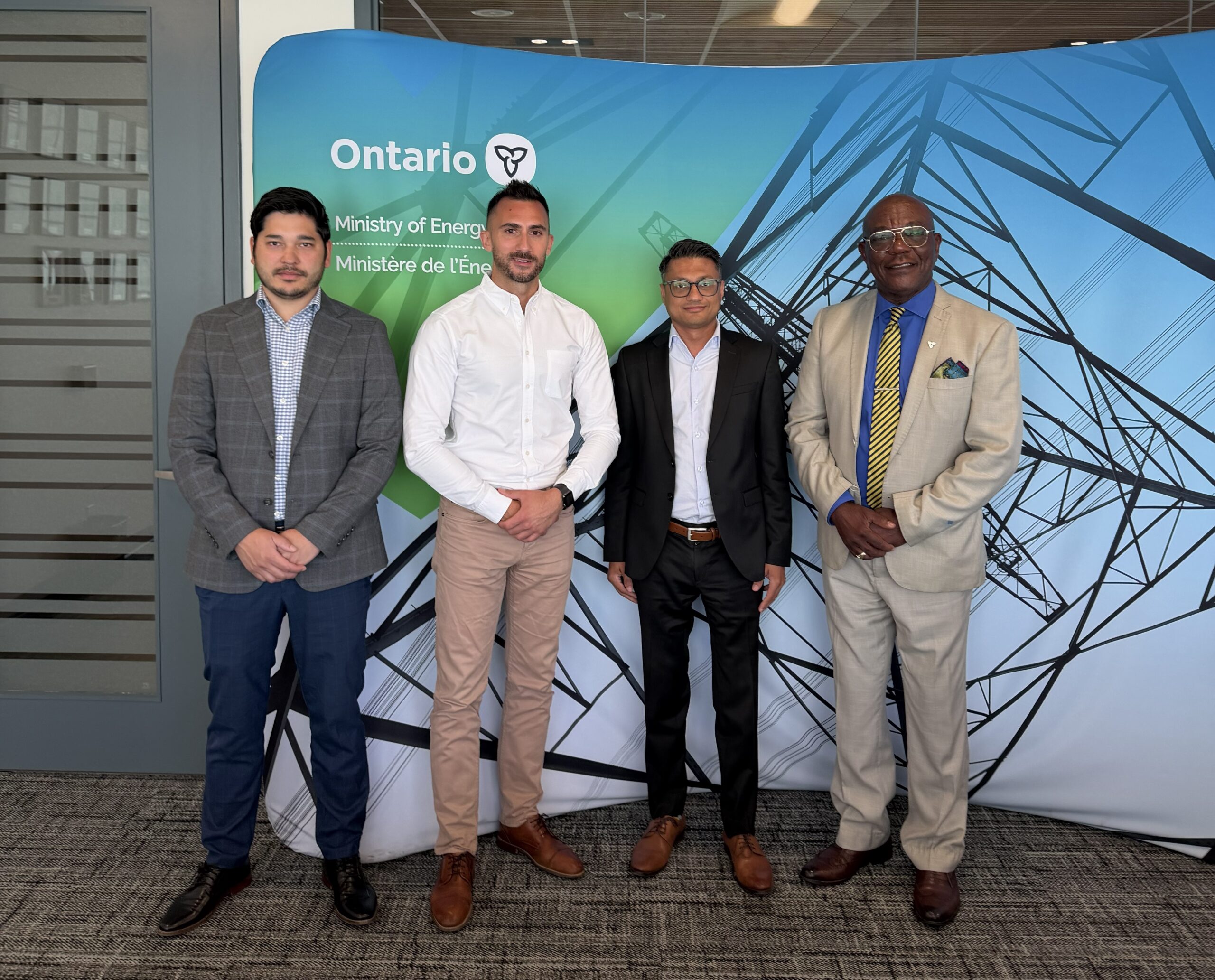
We’re proud to have been part of this conversation with the Ontario Ministry of Energy and Mines (https://www.ontario.ca/page/ministry-energy-and-mines), and even more excited about the partnerships ahead – where AI stops being a slide in a deck and starts showing up as fewer unplanned shutdowns, safer sites, and more tones recovered from the ore that’s already been mined